





Put simply, mitigation is the work of holding damage to its current size. Repair is a different job. Mitigation covers the steps taken ahead of repairs so undamaged materials stay that way. Our Bozeman crew mitigates a loss in four moves: control the source, extract the water, contain the wet zone and stabilize the building. When this stage goes right, there is less to rebuild afterward, occasionally nothing at all.
The words mitigation and restoration get used as if they were interchangeable. Each is its own phase of the job. Mitigation is the emergency phase: stop the loss, limit the spread, stabilize the home. Restoration is what comes after: drying is confirmed, and damaged drywall, flooring and finishes are repaired or rebuilt. Insurers treat them as separate line items too, so it helps to know which phase you are in.
Four tasks make up most mitigation visits. One: control the source and cut off any new water. Extraction, so standing water is gone. Third is containment, where controlled airflow and plastic barriers keep contaminants and moisture away from clean rooms. Four: stabilize by pulling materials beyond saving, applying antimicrobial to surfaces and setting up air movers plus dehumidifiers. Furniture and personal items are protected too, either relocated or raised on blocks.
How to Prevent Water Damage Mitigation Problems
Taking preventive measures can help you avoid costly water damage issues down the road. Follow these tips from our IICRC-certified technicians:
- Install an automatic shutoff valve that closes the main when a leak is detected.
- Ground next to the foundation should fall away from it, which keeps water from collecting there.
- Get the water heater checked every year, and replace it ahead of a tank failure.
- Find the main water valve and make sure it has not seized.
- Leave the heat on during winter trips so the plumbing cannot freeze.
- Before heavy rain returns, caulk openings at doors, windows and roof penetrations.
Need Help With Water Damage Mitigation?
Our IICRC-certified technicians are standing by to help.
Call (586) 231-9894 TodayWhat to Expect From Our Water Damage Mitigation
Our systematic approach delivers quality results on every project. Here's how we handle water damage mitigation from start to finish:
Control the Source
Depending on the cause, our crew closes the supply, caps a failed line, or covers the entry point with tarps and boards. Should a lasting fix require a plumber or a roofer, our team coordinates when that happens.
Remove Standing Water
Pumps and extractors take out the standing water, and we inspect the carpet and pad. Drying machines on their own cannot limit damage the way prompt bulk extraction does.
Contain Wet Areas
Plastic barriers and controlled airflow separate wet rooms from dry ones. This keeps humidity, dust and any contaminants from travelling through the house while work is under way.
Stabilize the Structure
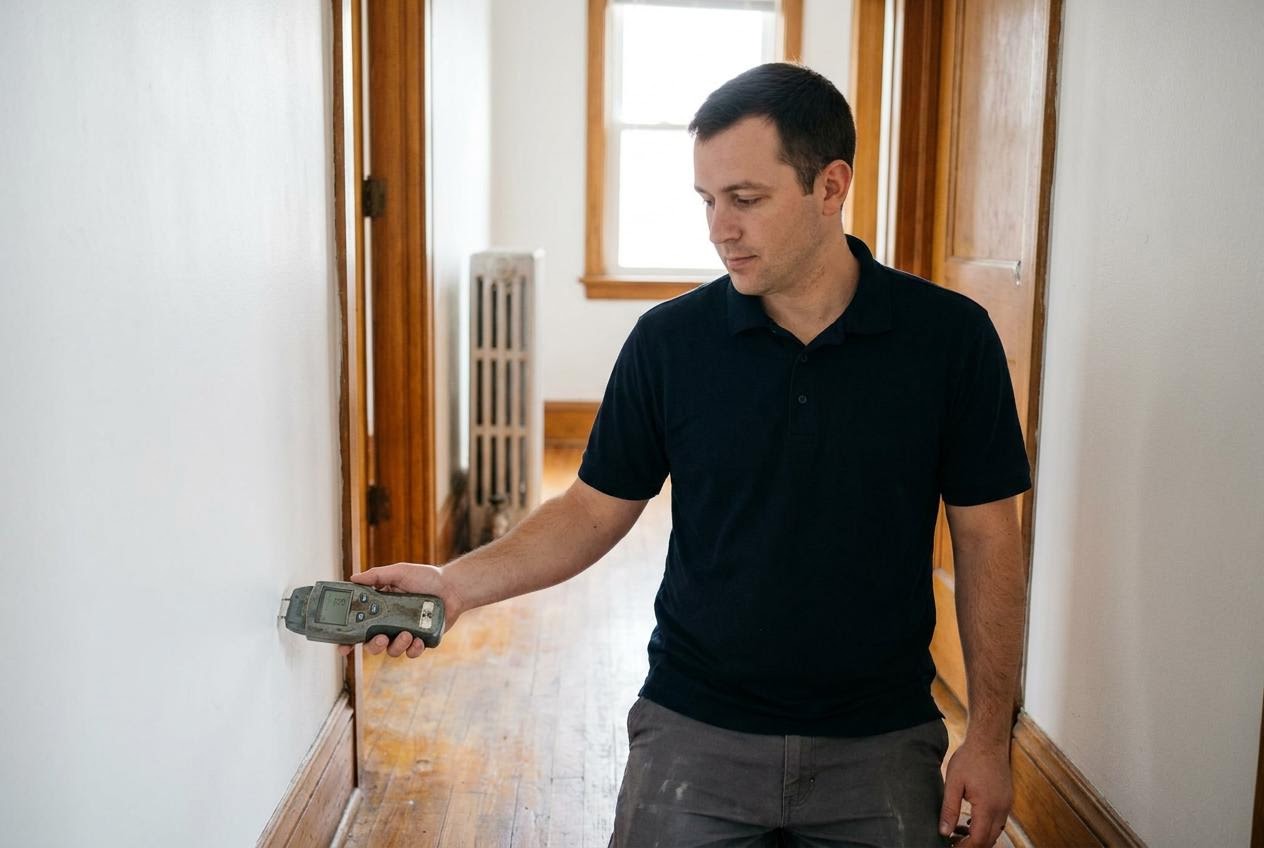
Materials past saving come out, an antimicrobial is applied to surfaces, and air movers plus dehumidifiers go in. Moisture readings are recorded on every visit until the structure can be repaired, typically in 3 to 5 days.
Warning Signs for Water Damage Mitigation
Recognizing the warning signs early can save you time, money, and prevent significant damage to your property. Watch for these telltale signs that professional help is needed:
- Wet materials have sat for a day and a musty smell is starting.
- Water is moving from one room into the next along the flooring.
- Carpet squishes underfoot, or the pad beneath it is saturated.
- An opening in the roof or at a window lets rainwater enter the building.
- An adjuster or agent said you must reasonably limit additional damage.
- A plumber fixed the pipe but nobody has dealt with the water.
- Windows keep fogging and the air feels humid days after the water loss.
Don't Wait Until It's an Emergency
What seems like a minor issue today can turn into a major expense tomorrow. Call Bozeman Restoration at (586) 231-9894 at the first sign of trouble.
Why Water Damage Mitigation Is Not a DIY Job
Doing mitigation well means making a string of quick judgment calls. What drywall stays and dries where it is, and what must be removed? Has the water shifted category since the leak started, and is it Category 1, 2 or 3 now? Does the cabinet toe kick need to come off? We answer those questions with training and moisture readings rather than by the look or feel of a surface.
Your insurance claim benefits from proper mitigation too. Under most policies you must act reasonably to keep the damage from growing, with proof that you did. On arrival we take photos, then log moisture readings every day and itemize whatever is removed. That file shows what the water did and what was done about it. It also gives the repair contractor a clear starting point, with no wet surprises behind new drywall.
Questions About Water Damage Mitigation?
Call Bozeman Restoration to discuss your water damage mitigation needs with a IICRC-certified technician.
Get Help: (586) 231-9894Your Water Damage Mitigation Questions Answered
Should You DIY or Call a Pro?
Some simple tasks are suitable for DIY, but most water damage work benefits from professional tools, training, and experience. Consider the following comparison:
| Factor | DIY Approach | Professional Service |
|---|---|---|
| Proof for insurer | Snapshots, no readings | Daily moisture logs and photo record |
| Contaminated water | Wiping obvious spots with bleach | Antimicrobial matched to water category |
| Water removal | Wet vac and a stack of towels | Bulk water out with pumps, extractors |
| Stopping the source | Turn it off and assume it held | Cause verified, isolated, recorded |
| Knowing when it is dry | Touch test on the surface | Readings logged every visit until dry |
Get Water Damage Mitigation Help Today
The sooner you call, the sooner we can help. Reach Bozeman Restoration for same-day service.
Call (586) 231-9894 Today